

Crush Course: Riesling
My personal favorite grape to drink, to pour, to sell, and to teach

Wine Ideas Crush Course is here to simplify your favorite (and my favorite) wine grapes.
We’ll be diving deep into a specific grape once a month. If you have a grape you want featured in this series, leave a comment and let me know, or argue in the comments with someone else about why your grape is better than their grape. Go crazy!
TLDR on Riesling:
It tastes like tart and crunchy limes, fresh green apples, white flowers, petroleum (in a good way!), and sometimes honey.
Riesling produces intensely aromatic white wines with high acidity and medium alcohol. It’s capable of the whole spectrum from bone dry to sticky sweet.
It’s grown all over the world, but mostly it thrives in cold climates. It’s most famous in Germany, Austria, Alsace, and the Finger Lakes of upstate New York.
An easy hack for knowing if it’s dry or sweet:
Wine labels are confusing: there are many languages and wacky words in various fonts and sizes and it’s nearly impossible for most consumers to organize what’s the name of the vineyard vs what’s the name of the winemaker vs what level of sweetness will this wine have? What do all the words mean?
Skip the words and look for numbers.
You’ll always find at least 2 numbers on a wine label:
The vintage: the year the grapes were harvested. This will look like “2021” or “1996,” for example. You can ignore this right now.
The ABV: alcohol by volume. This is the information we need. This can look like “7%” or “14%” or sometimes it’ll be a range like “12.5-13.5%”.
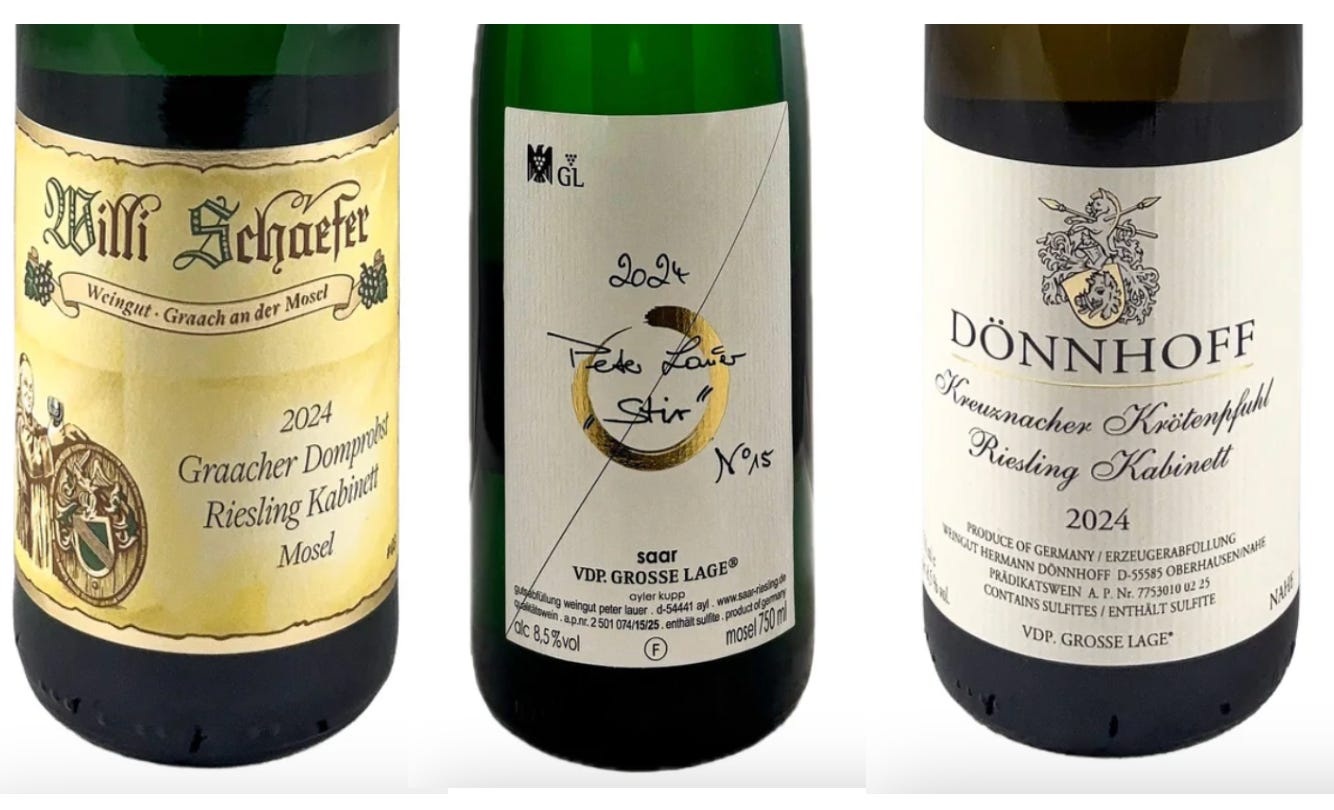
No but really, what on earth do these labels say?
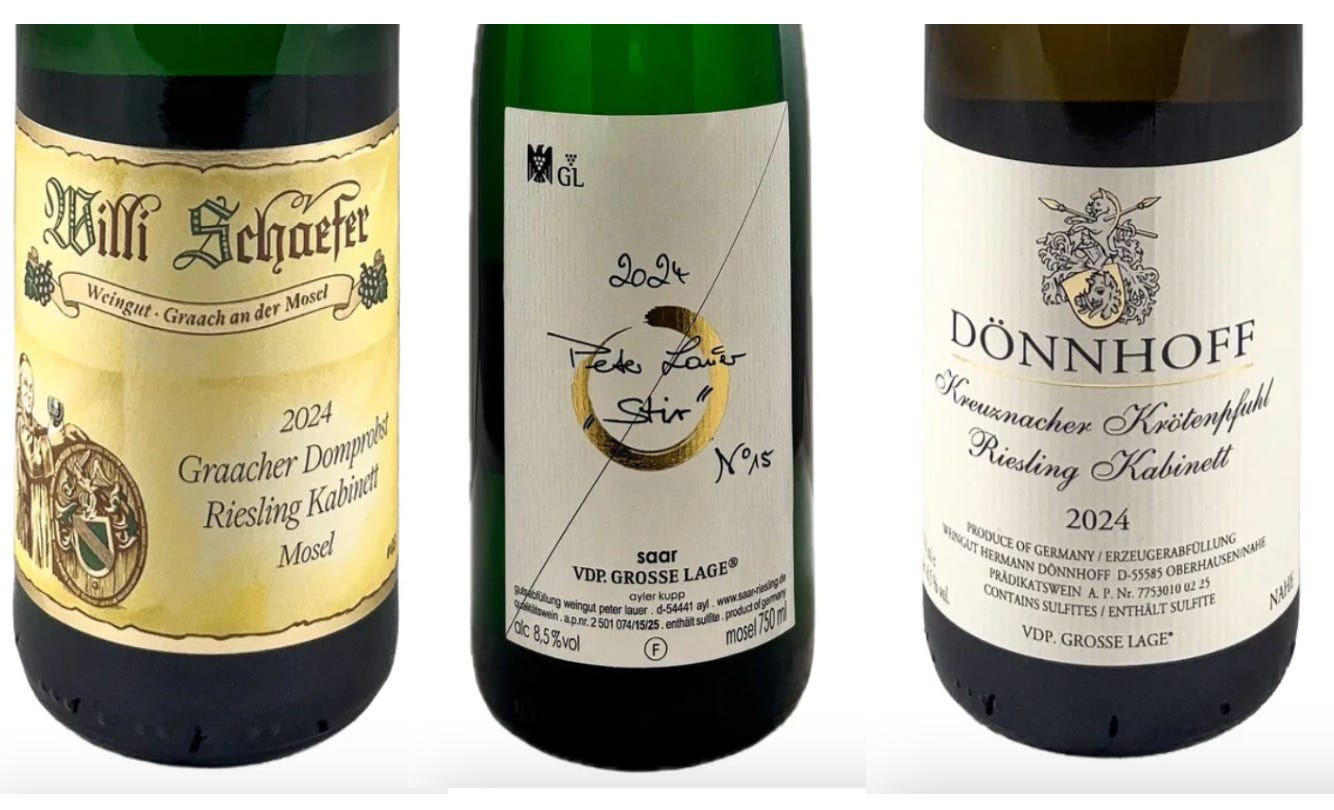
My secret here is the alchemy that is fermentation. Sugar is potential alcohol.
If fermentation goes to completion, we get more alcohol, and less sugar, resulting in a dry wine. If fermentation is stopped early, we get less alcohol, and more sugar left behind, resulting in a sweet wine.
So with Riesling, winemakers often halt fermentation intentionally (by chilling the wine or filtering out yeast), which leaves residual sugar in the wine. Since not all sugar is converted into alcohol, alcohol stays low.
Does this make any sense?
Lower alcohol = more sugar
If you want sweet Riesling, look for 7-10% alcohol.
If you want dry Riesling, look for 11-13% alcohol.
If you still want to look for words, look for “trocken” which literally translates to “dry” in German. You can also look for “Feinherb,” or “Grosses Gewachs” which both also mean dry.
As always, there are exceptions to all wine rules. I’ve had some Rieslings that are spectacular at 40 years old. The overwhelming majority, however, benefit from these easy rules:
Serve it cold. Riesling should feel refreshing, almost thirst-quenching in style. Serving it cold helps keep it that way.
Drink it from a regular wine glass. As long as it has sloped sides and a stem, you’re good to go.
You don’t need to decant it.
You don’t need to age it. Most Rieslings are designed to be drank immediately.
Germany
Germany offers the full range of Riesling expressions - from delicate and featherweight off-dry styles from the Mosel, to sparkling Sekt from the Pfalz, and powerful age-worthy styles from the Rheinhessen.
The wines of Germany notoriously have the most challenging labels to understand. I’m convinced that for this reason, they haven’t boomed in the American market the same way French wines have. Consumers don’t understand the labels, consumers feel intimidated, consumers avoid them altogether.
This means, those of us who are brave enough to look past the absurd labels are rewarded with extremely high quality wines and extremely reasonable prices.
Von Winning Winnings Riesling 2024 $21 A dry style from the Pfalz in Western Germany. Von Winning is a producer that makes gorgeous wine from not just Riesling, but also Sauvignon Blanc, and Pinot Noir, among others.
Dr. Loosen Urziger Wurzgarten Riesling Spatlese 2024 $33.99 At only 8.5% alcohol, this is a classic “spatlese” style from the Mosel in Germany. It’s coming from a historic and epically steep vineyard called “Urziger Wurzgarten” and the wine is gorgeous.
Schafer-Frohlich Fruhlingsplatzchen Riesling Grosses Gewachs 2023 $105 There’s that “Grosses Gewachs”! It means dry, yes, but it really means “great growth” (weird translation) and it signals a top-tier, dry wine from a top vineyard. This is exactly that.
Austria
Austrian Rieslings are maaaaybe my favorite Rieslings out there. Consistently dry, they offer a surprise factor for Riesling noobies, and a ton of value for those in the know.
Schloss Gobelsburg Schlosskellerei Gobelsburg Kamptal Riesling 2024 $24 Perfect, simple wine.
Weingut Franz Hirtzberger Federspiel Steinterrassen Riesling 2023 $47 This is where Riesling transforms from light and airy to full of character, depth, and dimension. Federspiel refers to the level of ripeness these grapes had at the time of their harvest. The result is a wine that is relatively full-bodied, at least on the Riesling scale.
Alsace
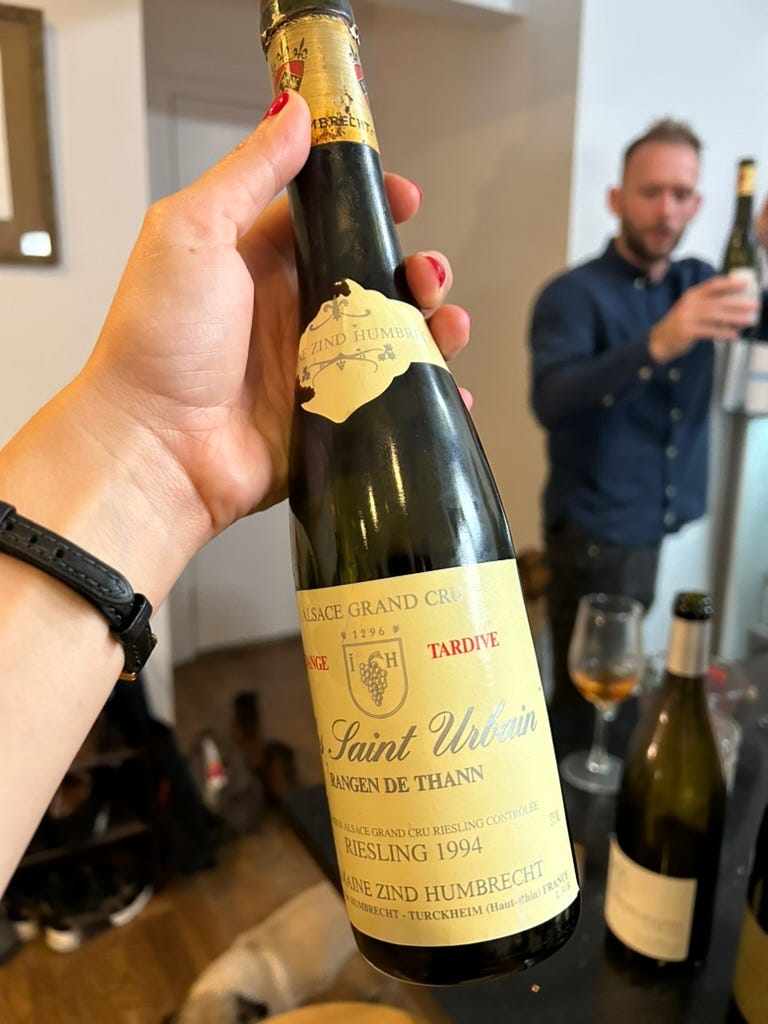
On the France side of the France Germany border, Alsace is home to some extraordinary Rieslings. Often fuller bodied and more ripe than their German counterparts (thanks to lots of sun exposure!), these wines are extremely food-friendly, versatile, and wallet-friendly.
Maison Trimbach Riesling 2022 $22 For when you’re stuck at a liquor store or a grocery store to buy your wine, seek out this iconic yellow label. It’s bright and zesty, straight-forward and very Riesling-y.
Albert Boxler Riesling Grand Cru Brand 2021 $91 Boxler is a winery known for utilizing botrytis even in their dry wines. This incredible fungus grows on the grapes in the vineyard, and concentrates honey, ginger, and saffron flavors in the wine. It’s so special.
Finger Lakes
If you were to tell me 5 years ago that some of my favorite domestic white wines were coming from New York, I’d probably laugh. I think it takes an open mind and a love of high acidity to truly love New York State wines. Winemakers in this region are creative, forward-thinking, risk-taking, and problem-solving artists. I love what is going on in the Finger Lakes.
Boundary Breaks No. 239 Dry Riesling 2023 $23 Perfect dry Riesling, featherweight and fruity, perfect for a big party.
Boundary Breaks Riesling Ice Wine 2025 $69 Here to showcase the full spectrum of Riesling sweetness, this is as sticky sweet as it gets. These grapes are harvested weeks (maybe months!) after they normally would be, ensuring full development of all sugars, and almost full evaporation of all water! Extremely concentrated sugars, extremely decadent dessert wine.
Shoutout to the Rieslings of Santa Barbara, Australia, Piedmont, and beyond!!! You are seen, you are heard, you are loved, too.
Riesling is confusing and rewarding and delicious and energizing and fascinating.
I urge you to explore your wine shop’s Riesling selection. If you still feel intimidated (I fully understand this), paid subscribers please text me.
Free subscribers, upgrade to paid and then text me from the Riesling aisle. It’s my dream to receive texts like this from you.